Walking in Healing, Wholeness, and Kingdom Compassion
Last month, we discussed Christ the Healer—how divine healing is not a fringe doctrine or merely the emphasis of a modern movement. Healing is a revelation woven throughout Scripture. From the beginning of the Bible to its conclusion, we see the Father’s heart revealed through restoration, redemption, reconciliation, and healing.
One of the earliest revelations of God as healer appears in Exodus:
“I am the LORD who heals you.”
—Exodus 15:26 NIV
The Hebrew word translated “heals” is rapha. It carries the idea of healing, restoring, repairing, mending, and making whole. We might picture an old-fashioned cobbler carefully stitching a damaged shoe back together. In a much greater way, God reveals Himself as the One who mends what is broken, restores what has been damaged, and makes lives whole again.
He is Jehovah Rapha—the Lord who heals.
This revelation continues throughout Scripture and reaches its fullest expression in the ministry of Jesus. When Christ came, He did not correct or diminish the revelation of God as healer. He demonstrated it.
Luke records:
“When the sun was setting, all those who had any that were sick with various diseases brought them to Him; and He laid His hands on every one of them and healed them.”
—Luke 4:40 NKJV
Imagine that scene. People from all over the region brought their sick family members and friends to Jesus. Those suffering from various diseases came to Him, and He laid His hands on every one of them and healed them.
We are grateful for physicians, nurses, medical researchers, and the remarkable advances of modern medicine. God often works through medical science and skilled professionals. Nevertheless, there are situations in which human knowledge and medical treatment reach their limits. There are moments when only Jesus can restore what has been broken.
Jesus was the healer then, and He is still the healer today.
But there is another dimension of Christ’s healing ministry that we must understand. Jesus not only heals; He invites His followers to walk with Him in a lifestyle of faith, compassion, dependence, and kingdom ministry.
Healing is not merely an isolated event. It is part of the continuing ministry of Christ through His people. Christ the Healer desires to work through ordinary believers as we step out in faith and pray for the sick.
That person might be a family member, a neighbor, a coworker, a friend, or someone we meet during the normal course of our day. We do not need to pray long, loud, or eloquent prayers. We can simply ask, “May I pray for you?”
We can look at the person with genuine love and pray:
“Lord, we invite Your presence. Jesus, would You come and touch this person? Holy Spirit, rest upon them. We ask You to heal this condition. In Jesus’ name, we command the pain to leave and the body to be restored.”
Healing prayer does not have to be complicated.
For many of us, the most difficult part is taking the first step. We must become willing to move beyond our fear, embarrassment, and self-consciousness. We must also refuse to become discouraged by what we immediately see—or do not see.
It is not our responsibility to produce healing. Our responsibility is to make ourselves available so that Christ the Healer can work through us.
Jesus Healed People in Different Ways
One of the most important truths we learn from the Gospels is that Jesus did not minister healing mechanically.
Sometimes He touched people.
Sometimes He spoke a word.
Sometimes He prayed publicly.
Sometimes He ministered privately.
Sometimes healing occurred immediately.
Sometimes healing unfolded progressively.
There was no mechanical formula—not even in the earthly ministry of Jesus. Healing was relational and compassionate. Jesus ministered in fellowship with the Father and through the power of the Holy Spirit.
Models and methods can be helpful. They can give us a practical framework for approaching someone, understanding the condition, praying, and evaluating what has happened. But healing must never be reduced to a technique. It must remain relational, dependent upon God’s leading, and filled with compassion for the individual.
Mark’s Gospel records a healing that unfolded in stages:
“They came to Bethsaida, and some people brought a blind man and begged Jesus to touch him. He took the blind man by the hand and led him outside the village. When he had spit on the man’s eyes and put his hands on him, Jesus asked, ‘Do you see anything?’
“He looked up and said, ‘I see people; they look like trees walking around.’
“Once more Jesus put his hands on the man’s eyes. Then his eyes were opened, his sight was restored, and he saw everything clearly. Jesus sent him home, saying, ‘Don’t even go into the village.’”
—Mark 8:22–26 NIV
Some believe Jesus led the man outside Bethsaida because of the village’s atmosphere of unbelief. Perhaps He wanted to remove him from the opinions and distractions of those around him so that the man could focus completely on Jesus. Scripture does not explain every detail, so we should avoid being dogmatic.
What we do know is that something happened when Jesus first ministered to him, but the healing was incomplete.
Jesus asked, “Do you see anything?”
The man replied, “I see people; they look like trees walking around.”
He could see, but he could not yet see clearly.
Jesus then placed His hands on the man’s eyes again. This time, his vision was completely restored.
The passage is important because it destroys the assumption that every healing encounter must look the same. It also demonstrates that praying more than once is not necessarily an expression of unbelief. Jesus ministered to this man a second time.
Of course, this passage does not mean we should create a new healing method involving spitting in people’s eyes! We had better know beyond any doubt that Jesus is directing us before attempting anything like that.
The broader point is that the kingdom of God is relational, not mechanical. It is not a one-size-fits-all system.
We like formulas because formulas make us feel as though we are in control. We imagine that if we can identify the correct steps, say the correct words, and follow the correct method, we will produce the desired result every time.
But if we could guarantee healing through a technique, we could push God out of the process entirely.
Healing ministry is not about control. It is about dependence upon the Holy Spirit.
A Legally Blind Eye Healed in Nogales
Several years ago, Pastor Carolyn, some members of our church, and I were ministering in a small church in Nogales, Arizona. We were praying for people with various physical conditions when I received a simple word of knowledge about someone having a problem with the right eye.
A young professional woman responded. I remember that she worked at a bank and was legally blind in her right eye. She could drive because her left eye had normal vision, but when she covered her left eye, everything in front of her appeared blurred and indistinct.
Carolyn felt that the Lord directed her to record the prayer on her phone. We do not normally record such moments, but she sensed that she should capture what was happening.
Another woman joined me, and we began to pray. We invited the presence of the Holy Spirit, asked Jesus to touch the woman’s eye, and commanded the eye to open and be healed in Jesus’ name.
There was nothing loud or dramatic about the prayer. I did not shout, push her, or strike her forehead. We simply stood with her calmly, loved her, and invited the Lord to come.
After praying, I asked her to cover her left eye and test the vision in her right eye.
She smiled and said, “It’s getting better.”
We prayed again.
She tested it again, and her vision had improved further.
The healing unfolded progressively over approximately ten minutes. After the third or fourth time of praying, she covered her left eye and looked through the right one.
Suddenly, she exclaimed, “Oh my gosh! Oh my gosh! I can see completely out of this eye!”
Jesus had restored her vision.
We were not the healers. We were simply praying, listening, loving, and inviting Him to touch her.
That experience reminded me of the blind man in Mark 8. The healing did not happen all at once. It unfolded in stages. Had we stopped praying after the first attempt, we might not have witnessed the complete restoration of her eyesight.
At the same time, we must be careful never to place pressure on the person receiving prayer. Sometimes we pray gently and sincerely, yet the individual does not experience healing. We should never tell someone, “You did not have enough faith,” “You did not believe hard enough,” or “Something must be wrong with you.”
We do not want people to need healing from the way they were treated during healing prayer.
We keep one eye on Jesus and the other on the person before us. We love them, honor them, and invite the Lord to come and be God.
The Power Is Not in a Formula
People sometimes ask, “What prayer did you pray?” or “What method did you use?”
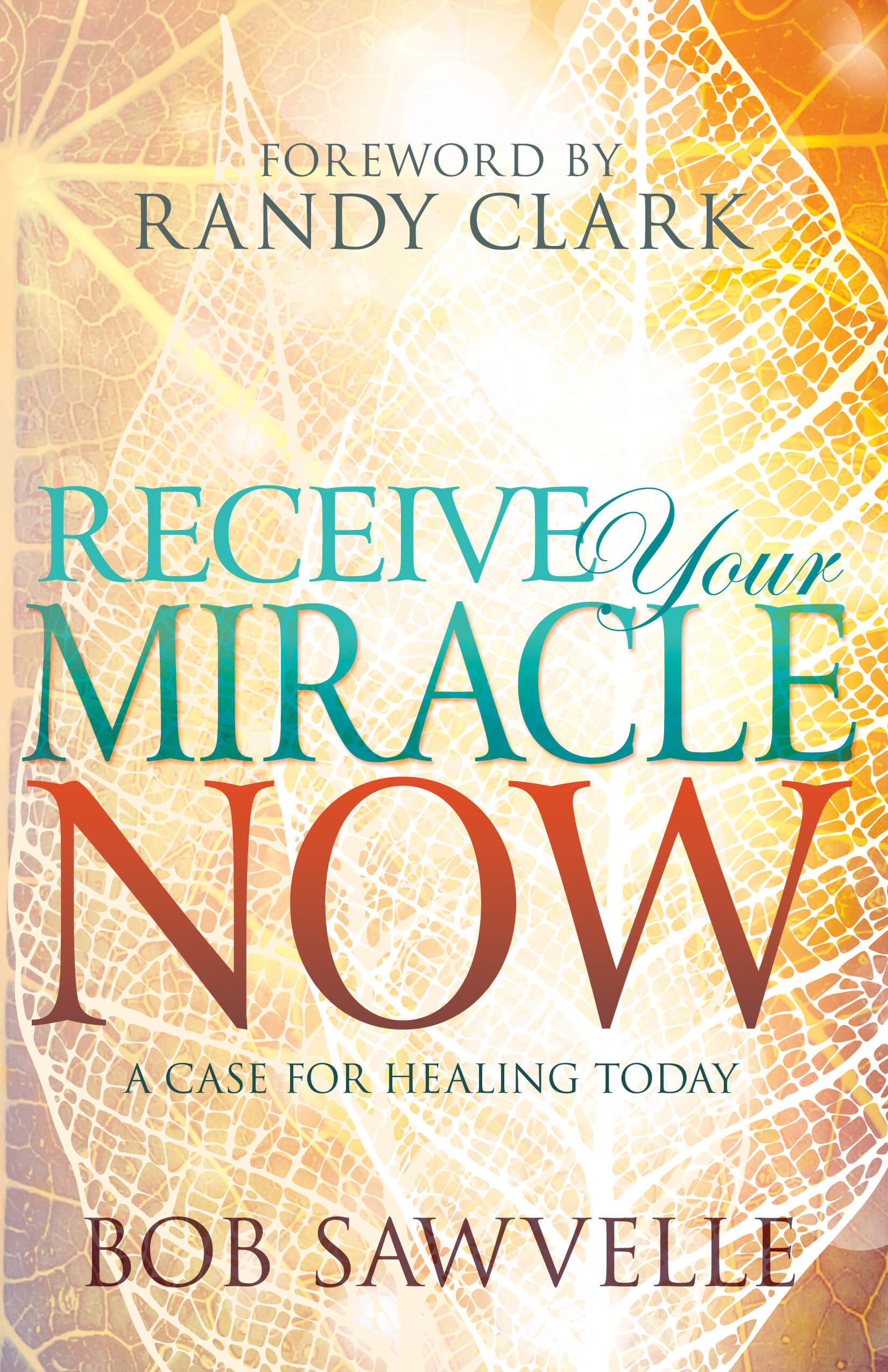
In my book Receive Your Miracle Now, I describe a five-step prayer model that I first learned during the 1980s through John Wimber, one of the founders of the Vineyard movement. Our ministry overseer, Randy Clark of Global Awakening, a former Vineyard pastor, later developed and expanded that model.
I have taught this approach for many years, and it is a helpful model. It provides a practical starting point, but it is not the only way to pray.
The power is not in a formula.
The power is in Jesus.
That truth should bring us peace. If healing depended entirely upon our performance, wording, confidence, or perfection, none of us would qualify. Healing flows from the mercy, authority, and compassion of Christ.
We do not have to perform. We have to depend.
Compassion Is Often the Atmosphere for Miracles
When we study the ministry of Jesus, we repeatedly encounter a significant phrase:
“He was moved with compassion.”
Compassion is not weakness. Compassion is the heart of God moving toward human suffering.
Jesus never treated hurting people as interruptions. He stopped for blind beggars. He touched lepers. He listened to desperate parents. He responded to the cries of broken and marginalized people.
This is a challenge for all of us, including me. What might happen if we slowed down, paused, listened, and became willing to ask someone, “May I pray for you right now?”
I believe we would see many more people touched, healed, encouraged, and restored.
Sometimes, before Jesus healed people physically, He restored their dignity emotionally and spiritually. We see this powerfully in the story of the woman with the issue of blood:
“And a woman was there who had been subject to bleeding for twelve years. She had suffered a great deal under the care of many doctors and had spent all she had, yet instead of getting better, she grew worse. When she heard about Jesus, she came up behind him in the crowd and touched his cloak, because she thought, ‘If I just touch his clothes, I will be healed.’ Immediately her bleeding stopped and she felt in her body that she was freed from her suffering.
“At once Jesus realized that power had gone out from him. He turned around in the crowd and asked, ‘Who touched my clothes?’
“‘You see the people crowding against you,’ his disciples answered, ‘and yet you can ask, “Who touched me?”’
“But Jesus kept looking around to see who had done it. Then the woman, knowing what had happened to her, came and fell at his feet and, trembling with fear, told him the whole truth.
“He said to her, ‘Daughter, your faith has healed you. Go in peace and be freed from your suffering.’”
—Mark 5:25–34 NIV
This woman had suffered for twelve years.
Twelve years of pain.
Twelve years of isolation.
Twelve years of disappointment.
She had gone from doctor to doctor and had spent everything she possessed. Yet instead of improving, her condition became worse.
When she heard about Jesus, something awakened in her heart. She believed that if she could simply touch His garment, she would be healed.
In that culture, some believed that power or virtue could be associated with prominent religious leaders or dignitaries. Whatever her understanding may have been, she was convinced that if she could reach Jesus, healing was possible.
She pressed through the crowd and touched His garment. Immediately, the bleeding stopped, and she felt in her body that she had been freed from her suffering.
Jesus also knew that power had gone out from Him.
He stopped and asked, “Who touched My clothes?”
The disciples were confused. People were pressing against Him from every direction. They essentially replied, “Everyone is touching You. How can You ask who touched You?”
But Jesus continued looking.
The woman must have been terrified.
Under the purity laws described in Leviticus, her persistent bleeding rendered her ceremonially unclean. She would have experienced tremendous social and religious isolation. She could not participate freely in normal community life or public worship. Anyone she touched could also be considered ceremonially unclean.
She had lived for twelve years under the weight of sickness, separation, and shame.
Now, Jesus was asking who had touched Him.
Perhaps she feared that she would be exposed, rebuked, or humiliated publicly. Many people know the fear of being exposed or shamed. Physical sickness is difficult enough, but some also carry deep emotional wounds of rejection, embarrassment, and disgrace.
The woman came forward trembling, fell at Jesus’ feet, and told Him the whole truth.
What would He do?
Jesus looked at her and said, “Daughter.”
That one word reveals the heart of God.
He did not call her “unclean.”
He did not call her an interruption.
He did not call her by her disease.
He called her “Daughter.”
Jesus said, “Daughter, your faith has healed you. Go in peace and be freed from your suffering.”
She had already received physical healing when she touched His garment. Jesus could have continued walking. But He stopped because she was not merely a miracle to Him. She was a daughter.
He wanted more for her than the end of her bleeding. He wanted to restore her identity, dignity, peace, and place within the community.
The woman had been healed privately, but Jesus restored her publicly.
She was not simply a testimony. She was a person whom the Father deeply loved.
We must remember this whenever we pray for the sick. People are not trophies, statistics, or notches in a ministry belt. They are someone’s daughter, son, mother, father, spouse, or friend. More importantly, they are people whom God created and loves.
We must never treat someone merely as an opportunity to prove that our prayers work.
Healing ministry without compassion becomes cold.
Healing ministry without love becomes performance.
Healing ministry without humility becomes dangerous.
Over the years, I have witnessed many different styles of healing ministry. I have seen people pray calmly and gently, and others become loud and forceful. I have watched ministers repeatedly push or strike people while commanding them to be healed.
God can work through imperfect people and imperfect methods, but we must ask whether our manner of ministry reflects the compassion and dignity Jesus demonstrated.
The goal is not to draw attention to ourselves. Jesus is the healer.
If healing ministry causes us to become proud, controlling, or insensitive to hurting people, we have misrepresented the kingdom. But when healing flows from genuine love, humility, and compassion, it accurately reveals the heart of the Father.
People always come before performance.
We Keep Praying
Some people ask, “What if I pray and nothing happens?”
Then we pray again.
We keep loving.
We keep trusting.
We keep believing.
We keep walking humbly with God.
Paul wrote:
“Let us not become weary in doing good, for at the proper time we will reap a harvest if we do not give up.”
—Galatians 6:9 NIV
Sometimes breakthrough comes suddenly.
Sometimes healing unfolds progressively.
Sometimes a person improves gradually over a period of days, weeks, or months.
Sometimes we do not understand the timing or why a particular healing does not occur.
Our assignment is faithfulness.
We are responsible for obedience.
God is responsible for outcomes.
This distinction is essential. If we believe we are responsible for producing the miracle, we will either become proud when something happens or crushed when it does not. But when we understand that Jesus is the healer, we can pray boldly while remaining humble.
We should pray and believe for a miracle. We should continue praying as long as there is an opportunity. Yet we must also love people regardless of the outcome.
There are dear people in our congregation presently facing serious illnesses, including late-stage cancer. We continue to believe with them, pray for them, support them, and ask God for miracles.
I would like to say that every person for whom I have prayed has been healed, but that would not be true.
I have prayed for people in churches, hospitals, homes, and ministry meetings throughout the United States and in many nations. I have witnessed remarkable miracles. I have seen people recover when physicians had given little or no hope. I have heard medical professionals express amazement because a disease or cancer could no longer be found.
But I have also prayed for people who were not healed as we had hoped.
We must live with that tension honestly.
We never stop believing that Christ is the healer. At the same time, our trust in Him cannot depend entirely upon receiving the outcome we desire.
We should never casually say, “God must have needed another angel,” or suggest that the Lord simply wanted someone in heaven. Human beings do not become angels when they die, and careless religious phrases can deepen the pain of grieving families.
Until Christ returns, physical death remains part of life in this present age. Paul wrote that to be absent from the body is to be present with the Lord. Every believer has the assurance of eternal life through Christ.
Our ultimate hope is not merely that we might live longer in these mortal bodies. Our hope is Jesus Himself.
We pray for healing because He has instructed us to pray. We believe for miracles because He is compassionate and powerful. But whether we see the outcome we desire or not, we continue to trust Him.
That is the key: trusting Him no matter what.
A Cancerous Tumor in Manaus
One of the most dramatic and unusual healing testimonies I have ever witnessed occurred during a ministry trip to Manaus, Brazil.
Manaus is a large city located along the Amazon River. As you travel west from the city, you move increasingly into the Amazon jungle region.
The church hosting the meetings had experienced extraordinary growth. At the time of our visit, approximately fifty thousand people were connected to the church. I later heard that the congregation had grown to nearly 100,000.
They had recently constructed an auditorium that seated approximately ten thousand people. Even with a facility of that size, attendance had to be managed carefully. Cell-group leaders sometimes assigned their members particular services because the crowds were so large.
During one of the meetings, the auditorium was packed. Ministry teams were spread throughout the building, praying for people.
I was praying for someone when, approximately ten feet to my right, I noticed two women ministering to another woman. There was a great deal of activity throughout the auditorium, so at first I did not know what was happening.
Suddenly, I heard the woman let out a piercing cry.
The two women praying for her remained calm and continued ministering. A few moments later, several ushers rushed toward them, carrying towels and a bucket.
The woman had a large cancerous tumor protruding from her abdominal area. As the two women prayed, something extraordinary happened.
One moment, the tumor was in her body.
The next moment, it was lying on the floor.
At the time, I could see the ushers cleaning up the area, but I did not understand the full story.
The following evening, church leaders invited people to share testimonies before the meeting began. The woman came onto the platform and, through a Portuguese translator, explained what had happened.
She said that physicians had told her the tumor was inoperable because of its location. She had come to the meeting believing God for a miracle.
As the two women prayed for her, she said she saw an angel come to her, place his hand into her abdomen, and remove the tumor. The next thing she knew, the tumor was on the floor, and the angel had disappeared.
That was her testimony.
We later learned that she returned to her doctor and was found to be completely cancer-free!
It remains one of the most unusual accounts of healing I have ever encountered.
What also impressed me was that the women praying for her were not famous ministers or prominent pastors. They were ordinary members of the ministry team. They were simply available, praying for someone in need.
Jesus was the healer.
Healing Ministry Belongs to the Whole Church
I believe God desires to stir many believers into healing ministry—not merely pastors, evangelists, or those with public platforms, but ordinary Christians who are filled with the Holy Spirit.
Jesus said:
“And these signs will accompany those who believe: In my name they will drive out demons; they will speak in new tongues . . . they will place their hands on sick people, and they will get well.”
—Mark 16:17–18 NIV
Jesus said that believers would lay hands on the sick.
Healing ministry belongs to the whole church.
You do not have to be famous.
You do not need a platform.
You do not need a title.
You do not need to have every theological question answered.
You need compassion, faith in Jesus, dependence upon the Holy Spirit, and a willingness to obey.
Some of the most powerful prayers are simple prayers offered with genuine love:
“Jesus, would You touch this person?”
“Father, let Your peace come.”
“Holy Spirit, rest upon them.”
“In Jesus’ name, be healed.”
We do not need to become loud or behave strangely. We can pray calmly, lovingly, and confidently.
Confidence is not the same as arrogance. Our confidence is not in ourselves; it is in Christ.
You are a child of the King.
Christ lives in you.
The Holy Spirit is present.
Never underestimate what God can do through simple obedience.
Sometimes believers say, “I have never seen anyone healed when I prayed.”
One practical response is this: pray for more people.
We will not see people healed if we never offer to pray. As we step out more frequently, we will learn to listen more carefully, love people more deeply, and trust the Holy Spirit more fully.
We should not measure success only by the visible result. Obedience itself matters.
Every time we pray with someone in love, we demonstrate that God sees them, cares for them, and has not forgotten them.
A Call to Faithful Compassion
Healing ministry is not about becoming impressive. It is about becoming available.
It is not about mastering a formula. It is about depending on the Holy Spirit.
It is not about proving our spirituality. It is about revealing Jesus’ compassion.
Christ invites us into His continuing ministry. He calls us to notice those who are hurting, to slow down, to listen, and to pray.
He may lead us to pray for a coworker during a lunch break, a neighbor standing in the driveway, a family member facing surgery, or a stranger who mentions chronic pain.
We do not need to force the moment. We can simply ask permission:
“Would it be all right if I prayed for you?”
Then we love them, invite the Holy Spirit’s presence, and pray with faith.
If something improves, we can pray again.
If nothing appears to happen, we continue to love them.
We do not blame them.
We do not become discouraged.
We do not exaggerate.
We remain humble, honest, compassionate, and expectant.
Jesus Christ is the same yesterday, today, and forever. His nature has not changed. His compassion has not diminished. His authority has not weakened.
He is still Jehovah Rapha.
He is still Christ the Healer.
And He still desires to reveal His healing love through His people.
Reflective Questions
1. Am I willing to slow down and notice hurting people rather than treating them as interruptions?
2. Have fear, disappointment, or self-consciousness kept me from offering to pray for someone?
3. Do I view healing ministry as a formula to master, or as a relationship of dependence upon the Holy Spirit?
4. When I pray for someone, am I more concerned about the outcome reflecting well on me, or about the person feeling loved and valued?
5. Can I continue believing for miracles while trusting Christ with outcomes I do not understand?
6. Who in my family, workplace, neighborhood, or church might need compassionate prayer this week?
Closing Prayer
Father, we thank You that You are still Jehovah Rapha—the Lord who heals us.
We thank You that Jesus Christ is the same yesterday, today, and forever.
Thank You for revealing Your heart of restoration, redemption, reconciliation, and healing throughout Scripture. Thank You that Jesus came not only proclaiming the kingdom but demonstrating it through compassion, deliverance, and healing.
Lord, release Your healing presence among Your people.
Fill us with genuine compassion for those who are suffering. Deliver us from fear, pride, performance, and the need to control outcomes. Teach us to listen to the Holy Spirit and to respond with simple obedience.
Give us boldness to pray for family members, neighbors, coworkers, friends, and strangers. Let the gifts of healing, miracles, faith, and words of knowledge operate through ordinary believers.
Holy Spirit, impart Your power and grace. Let healing flow through Your church. Let pain leave, bodies be restored, minds be renewed, and broken hearts be made whole.
Teach us to pray with confidence while walking in humility. Help us keep loving when healing is progressive or when we do not understand the outcome.
May every person we encounter know that they are seen, valued, and deeply loved by the Father.
Jesus, receive all the glory.
In Your mighty name we pray.
Amen.