Jesus came to redeem us—to restore us, to bring us back, if you will, to His original intent. That intent was for us to walk with God in the cool of the day, and to live in His abundant life—to live continually in God’s presence.
From the very beginning, the theme of healing runs throughout Scripture—from the Old Testament to the New. This is not a secondary theme; it is central to God’s heart and His redemptive plan. Jesus came to redeem, restore, and heal us.
Theme of Healing
From the beginning of Scripture to the end, we see a consistent motive of healing in God. He has always been a healer. He has always been a restorer. He has always been a redeemer. He has always been a loving Father—and that is still His desire.
We see this as early as Exodus 15:26, where God declares, “I am the Lord who heals you.” This is not a modern idea; it is a revealed aspect of God’s nature—His identity. He is Jehovah Rapha, one of His covenant names.
The Hebrew word rapha means to mend together, like a cobbler repairing shoes—to sew, restore, make whole, and make well. That is who He is.
Healing is not a modern invention or a theological trend—it is embedded in the very name and nature of God. His name reveals His heart: restoration, mending, and wholeness.
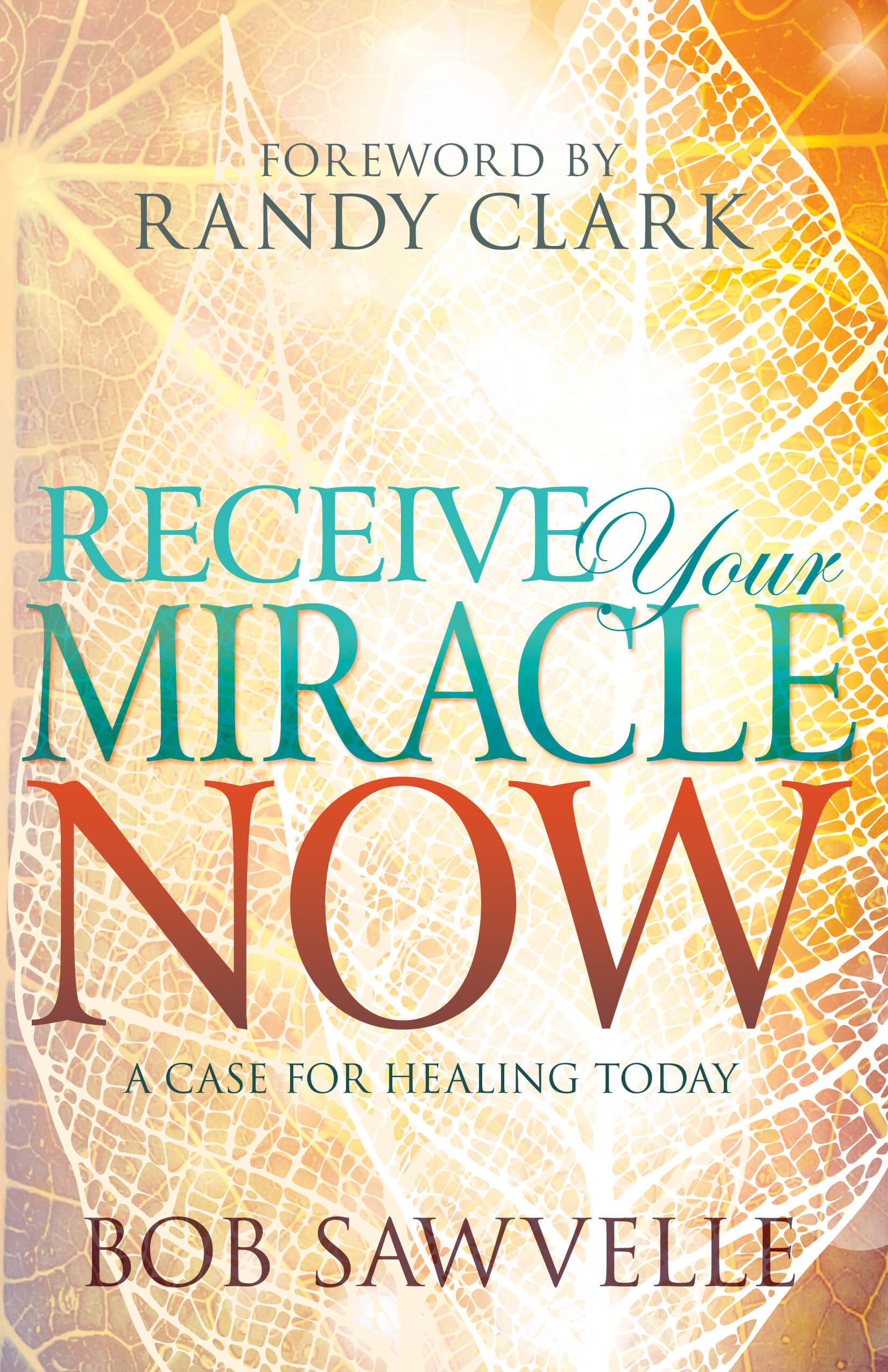
For a deeper study of divine healing, I’ve explored this more fully in my books A Case for Healing Today and Receive Your Miracle Now!
When Jesus arrives, He says, “If you’ve seen Me, you’ve seen the Father.” He doesn’t correct this revelation—He fulfills it. Everything Jesus did demonstrated God’s love for humanity.
He heals the sick. He cleanses lepers. He restores sight. He delivers the tormented. Scripture records that He went about doing good and healing all who were oppressed by the devil (see Matthew 4:23–24; 8:16–17).
In Matthew 8:16–17, we see a powerful bridge between the Old Testament revelation and its fulfillment in Christ.
“When evening had come, they brought to Him many who were demon-possessed. He cast out the spirits with a word and healed all who were sick, that it might be fulfilled which was spoken by Isaiah the prophet: ‘He Himself took our infirmities and bore our sicknesses.’”
This points back to Isaiah 53. Jesus bore our sin and sorrow—but He also bore our sickness and disease. He reveals the Father’s compassion and demonstrates the kingdom’s superiority over darkness.
As 1 John 3:8 declares, “For this purpose the Son of God was manifested, that He might destroy the works of the devil.”
Sickness, disease, poverty, and suffering do not come from the Father. They are the result of a fallen world and a real kingdom of darkness opposing the kingdom of light.
Authority Given to Believers
Then Jesus does something that reshapes our theology—He shares His authority.
We all know we’re not perfect. Yet through what He accomplished on the cross, He forgave us, filled us with His Spirit, and granted us His authority. It’s almost scandalous.
In Matthew 10:1, Jesus calls His disciples and grants them power over unclean spirits and authority to heal all kinds of sickness and disease. Then He sends them with a simple message: preach the gospel and heal the sick (Matthew 10:7–8).
I remember ministering in India, where education is highly competitive. A mother came to me, weeping, with her teenage daughter. She said her daughter had suddenly become troubled—unable to study or function.
She pleaded, “If you can do anything…”
In my humanity, I can’t do anything—but Jesus can. So we prayed. I waited on the Holy Spirit and felt prompted to simply command the spirit to leave. I quietly said, “In the name of Jesus, loose her.”
Immediately, the girl’s expression changed. She smiled. The mother wept with gratitude. The girl said, “Mom, I’m ready to study again.”
Jesus’ arm is not too short. He remains powerful.
After the resurrection, Jesus expands this commission in Matthew 28:18–20: “All authority has been given to Me… Go therefore…”
We are called not only to teach but also to demonstrate the kingdom. This includes not only moral teaching but also the revelation of God’s power over darkness.
This is why healing cannot be dismissed as peripheral. It is part of the kingdom’s mission. It is part of God’s love for humanity. It is part of what it means to be an ambassador of reconciliation—because reconciliation is not merely spiritual; it is restorative.
The kingdom not only forgives—it renews, heals, and restores.
The Nature of Healing Ministry
Healing must be understood carefully and rightly. It is not a lever we pull to force outcomes. It is not a spiritual technique or a performance. Healing is a manifestation of Christ’s compassion and authority through the Holy Spirit.
We pray because Jesus told us to.
We lay hands because Scripture models it.
We expect because God is good.
We remain humble because we are not the source.
I’ve prayed for many people over the years. Some are healed instantly. Others are not. In some cases, some are never healed. It’s a mystery I don’t fully understand.
God is not a cosmic bellhop. We don’t command Him—but we align with His nature. We obey what He told us to do: lay hands on the sick, pray in Jesus’ name, and trust Him with the results.
I’ve witnessed incredible healings over the years, but you must remain humble. It’s not you—it’s Jesus. You just happen to be the person God used in that moment.
A Balanced Theology of Healing
I want to pastor you here, not merely instruct you.
If you have experienced healing, you know how tender this subject is. You may even be amazed by how it happened—often quietly and unexpectedly.
I remember a healing in my life—my knee had been in pain for weeks. Many people prayed, but nothing changed. Then one day, a pastor prayed for me and simply said, “Receive it.” As I tested it, I realized the pain was gone. It was healed—without fanfare, just suddenly different.
If you have not experienced healing yet, you know how painful this can be. Some have been believing for years.
So we approach this with both truth and tenderness.
The New Testament does not teach us to lower our expectations—it teaches us to remain faithful by asking, seeking, knocking, and persevering (see Matthew 7:7–11; Luke 18:1).
At the same time, Scripture shows us that not every situation unfolds as we want in the moment. Paul tells Timothy to use practical remedies (1 Timothy 5:23). He even leaves Trophimus sick at one point (2 Timothy 4:20).
So what do we do with it?
We do not build a cynical theology from unanswered prayers.
We also do not build a harsh theology that blames the suffering.
We refuse both extremes.
We hold a balanced view:
• God heals.
• Jesus still heals.
• The Spirit empowers prayer for healing.
Yet we remain humble, compassionate, and faithful even when outcomes are delayed or unclear.
That is not a compromise. That is maturity.
Healing Rooted in Love
Healing ministry must be rooted in love. Faith works through love.
If love is absent, healing becomes a contest, and people become projects—but love never treats people that way.
Love honors their story.
Love carries their pain.
Love refuses to shame them for what they cannot control.
And love keeps praying.
A Call to Prayer
Father, You are good, loving, and kind. You are the healer and the deliverer. There are many needs—physical, emotional, and spiritual. For those who have never given their lives to Christ, today is the day of salvation. Holy Spirit, come. Let Your presence touch those reading.
I thank You that You are still healing. I have seen cancer healed, heart conditions restored, and miraculous interventions—even in cases where doctors found no trace of prior illness.
One powerful example comes from our food box ministry. A woman came simply to receive food, and as we always do, she was invited to pray—never forced, just invited. She shared that her feet were in pain, so my wife and another lady prayed for her. Immediately, she noticed her feet were healed.
Encouraged by that, she then asked, “Would you pray for my kidneys? I’m on dialysis.” She explained that one kidney wasn’t functioning at all, and the other was operating at only about 30 percent. Again, a simple prayer was offered—nothing dramatic. She received her food and left.
About two months later, she returned. As she was heading out, she turned back and said to my wife, “Oh, by the way…” She brought documentation from her doctor—an article he had written titled “Miracle Kidney Healing.”
When she returned for evaluation, her kidneys were functioning normally! The doctor was so stunned that he documented it as a miracle. When asked what happened, she simply said, “The ladies at the church prayed for me.”
That’s Jesus.
You are still the healer.
I pray for every need—kidneys, livers, shoulders, eyes, and more. I speak healing in Jesus’ name. Let Your presence bring restoration from the top of the head to the soles of the feet.
We also pray for hearts—where forgiveness may be needed. Sometimes healing is connected to what we carry within. Help us release bitterness and walk in freedom.
We reject the lie that sickness comes from You. Every good and perfect gift comes from above. While you work through difficult situations, you are not the source of sickness.
A Final Charge
To the younger generation—those sensing a call from God—step forward in faith. Ask Him boldly what He has for your life.
We pray for boldness, freedom from depression, and a fresh fire of the Holy Spirit.
Lord, raise up voices in this generation—on campuses, in workplaces, and across the nation. Let revival break out.
Conclusion
Jesus remains the healer. He remains the loving Savior.
We will continue to pray, believe, and trust.
And above all, we will walk in love.
Amen.