Healing is not a reward we earn.
It is covenant mercy revealed in Jehovah-Rapha and secured for us by Jesus Christ, the Mediator and Guarantee of a better covenant.
That truth must become the anchor of our faith, because much of what we call faith is rooted in experience. If something good happens, we say God is good. If a prayer is not answered as we expected, we begin to question His heart. If someone is healed, we believe healing is possible; if someone is not healed, we may quietly revise our theology in response to disappointment.
Experience matters. Testimonies encourage us, and disappointments can wound us deeply. Yet experience is not strong enough to bear the weight of our faith.
Experience tells us what happened. Scripture reveals who God is.
Scripture reveals that God has always been a Healer, a Restorer, and a Savior. We do not deny what we have experienced; we simply refuse to make it the final authority. God’s Word must interpret our experience, not the other way around.
Psalm 103:2–3 says, “Bless the LORD, O my soul, and forget not all His benefits: Who forgives all your iniquities, Who heals all your diseases.”
We may find that we have faith for one condition because we have seen God heal it, yet struggle to believe Him in another area because we have not seen the same result. Yet our confidence cannot rest on what we have or have not witnessed. It must rest in God’s Word.
Our confidence is not in the strength of our faith, the perfection of our prayers, how anointed we feel on a particular day, or how strongly we sense the Spirit. It is in the character of God revealed in Jesus Christ. Our prayers will never be perfect enough, but He is perfect.
Let God Remove the Scales
On the road to Damascus, the Lord confronted Saul, the learned Pharisee who had been persecuting the early church. Saul was left blind for three days, with something like scales covering his eyes. Then a faithful disciple named Ananias obeyed God, prayed for him, and the scales fell away. Saul could see again. His life was transformed, and the man we know as the apostle Paul went on to write a significant portion of the New Testament (Acts 9:1–19).
I believe the Lord still wants to remove scales from our eyes—not necessarily physical scales, but the layers of religiosity, poor doctrine, disappointment, and personal experience that obscure the truth about His nature. We can pray, “Lord, remove every blindfold that keeps us from seeing what Your Word reveals about who You are.”
Unanswered prayer does not dilute God’s Word. We have to embrace mystery; that is part of what makes this faith. Mystery does not make God any less of a Healer.
Some pastors and theologians argue that preaching faith and divine healing gives people false hope. I would rather proclaim the Word and let God be God. I believe the greater counterfeit is a message that never tells people that God is still miraculous, that He still moves in signs and wonders, and that His mercy still includes healing.
Healing is not a badge for the person who prays. It is not another notch on someone’s belt, proof that the minister is special, or evidence that a prayer was eloquent enough. We remain humble and yielded. Some of the most powerful healings I have witnessed occurred when I felt the least spiritual. God moved because He is God; my part was simply to obey.
I have also seen children pray, with remarkable healings following. There is no junior Holy Spirit. Some believers have specific gifts of healing, as Paul explains in 1 Corinthians 12, but every disciple of Jesus can pray for the sick and believe God to move. Jesus said that believers would lay hands on the sick and that they would recover, and that signs would follow those who believe (Mark 16:17–18).
We often say we want to see healings or revival, but signs require someone to follow. If we want more people to come to Christ, we should share our faith more. If we want more people healed, we should pray more for the sick. Jesus declared that all authority had been given to Him and commissioned His disciples to go, make disciples, and teach them to obey all He had commanded (Matthew 28:18–20).
The weapons of our warfare are not carnal but mighty in God for pulling down strongholds (2 Corinthians 10:4). We wield the authority Jesus has given us, the authority of His name, and the power of His Word against the enemy’s works.
Jesus Reveals the Father
Jesus said, “He who has seen Me has seen the Father” (John 14:9).
Jesus is perfect theology. If we want to know how the Father responds to the broken, the oppressed, the ashamed, and the sick, we look to Jesus. He never had to persuade the Father to be compassionate. He revealed the compassion already present in the Father’s heart.
Peter summarized Jesus’ ministry this way:
“God anointed Jesus of Nazareth with the Holy Spirit and with power, who went about doing good and healing all who were oppressed by the devil, for God was with Him” (Acts 10:38).
Jesus was fully God and fully man. He grew in wisdom, stature, and favor with God and man (Luke 2:52). After coming out of the Jordan River at His baptism, He was filled with the Holy Spirit, led by the Spirit into the wilderness, and returned in the power of the Spirit (Luke 4:1, 14). Acts 10:38 outlines the direction of His ministry: God anointed Him; He went about doing good; the oppressed were healed.
Healing was not a side issue in Jesus’ ministry. It was one of the clearest demonstrations that the kingdom of God had drawn near. Jesus came to heal, deliver, and set free the oppressed. His ministry settles the question of God’s heart: He desires to heal and make people whole. Yet we also acknowledge that not everyone we pray for is healed, and there may be reasons we do not understand. We hold that mystery without altering what Jesus has revealed about the Father.
Sickness and oppression were never treated as treasures to be safeguarded. Sometimes people cling to an illness as though it defines them. Faith does not require us to deny a condition or pretend it is absent.
We can honestly say, “I am struggling with this, but I am believing God for healing.” We acknowledge the need without making it our identity or a treasure we must protect. In Jesus’ ministry, people were loved, restored, forgiven, delivered, and made whole. That is the nature of the Father He revealed.
The Tender Heart of the Father
The Lord says in Hosea 11:3–4, “I taught Ephraim to walk, taking them by their arms; but they did not know that I healed them.”
Hosea gives us the image of a father teaching a small child to walk—holding the child by the arms, bending low, and guiding each uncertain step. Anyone who has raised children or enjoyed grandchildren knows the tenderness of that moment. Healthy parents guide, help, and nurture their little ones. If imperfect human parents know that kind of tenderness, how much more does our perfect heavenly Father?
The people did not even recognize that the Lord was the One healing and sustaining them, yet His mercy continued to reach out. Sometimes God has been kinder to us than we knew. Sometimes healing began before we understood what was happening. Sometimes another person carried expectancy when our own heart was tired.
Perhaps you have prayed through an illness, followed your doctor’s instructions, taken medication, and done everything you knew to do without seeing an immediate change. Then one morning you woke up and suddenly realized you were better. Could it be that you received a sovereign touch of Almighty God without recognizing the moment it came? He is working even when we do not perceive Him.
Healing also reaches the heart. I once spoke with a man whose family had just made the painful decision to put down a beloved pet. His wife was taking it especially hard, and I promised to pray for them. I understood some of that grief. Our family had a shepherd-collie mix for thirteen years. He was a wonderful dog, and I used to take him hiking all over. When he died, my wife and daughter left the next day to visit family back East. The house was suddenly empty, and I was alone with a grief deeper than I had expected.
For three days, I grieved. I remember sitting in my office, telling the Lord how painful it was. Then, sometime that evening, the heaviness lifted. Joy began to return. I still have pictures of that old dog around the house, and I still miss him, but the piercing pain has left. I know God healed my heart. He also used that experience to teach me, as a pastor, more about grief and how to understand people walking through it. God even used a dog to deepen my compassion.
As Romans 8:28 reminds us, He works all things together for good for those who love Him and are called according to His purpose.
I have also seen God touch someone who came with little expectation of being healed. One day, while returning from the airport, I stopped at a gas station. An older gentleman pulled up on the other side of the pump. As he got out, I noticed him hobbling, and the Lord prompted me, “Pray for him. Pray for his knees.”
I did not introduce myself as a pastor. I simply asked, “Sir, may I pray for your knees?”
Still pumping his gas, he agreed. I asked which knee was troubling him, placed my hand on it, and prayed a short prayer: “Lord, let Your healing presence come. Let all pain leave, restore this knee, and heal him in Jesus’ name.”
Then I asked him to bend the knee and see whether anything had changed. He did and exclaimed, “Oh my gosh, all the pain is gone. This feels really good!” Then he asked, “Can you pray for my other one?”
I prayed for the other knee, and he said both knees felt wonderful. This man, who appeared to be in his seventies, immediately announced, “Now I can play flag football again!” I remember thinking, “Please don’t play football!”
He had not arrived at that gas station expecting healing. I was simply trying to obey the Holy Spirit. Sometimes, when we least expect it, God shows up.
This gives us a necessary question: Have I allowed a painful experience to speak louder than the Word of God about the Father’s heart?
Many of us have prayed prayers that appear unanswered, including prayers for healing. That does not nullify God’s Word. We should not pretend to understand every mystery, but neither should we abandon what God has revealed about Himself.
“I Am the LORD Who Heals You”
God formed the nation of Israel divinely and miraculously. After four hundred years of slavery, He delivered His people from Egypt with a mighty hand, led them through the Red Sea, and placed a song of victory in their mouths.
Then, only three days into the wilderness, they came to Marah. The water was bitter, the people were thirsty, and the celebration of deliverance gave way to complaint. It was in that bitter place—not after Israel had proven itself faithful—that God revealed Himself as the Lord who heals.
Exodus 15:22–26 tells us that the people could not drink the waters of Marah because they were bitter. When they complained, Moses cried out to the Lord. God showed him a tree, and when Moses cast it into the waters, the waters became sweet. There, God made a statute and an ordinance for His people and said:
“If you diligently heed the voice of the LORD your God and do what is right in His sight, give ear to His commandments and keep all His statutes, I will put none of the diseases on you which I have brought on the Egyptians. For I am the LORD who heals you” (Exodus 15:26).
The Hebrew name often rendered here as Jehovah-Rapha means the Lord who heals, restores, repairs, and makes whole. The word conveys the image of mending—like a cobbler stitching something torn back together—and of restoring it to health.
Exodus 12:37 records that about six hundred thousand men left Egypt on foot, along with women and children. The entire company is commonly estimated at close to two million people. This was not a private promise to one unusually spiritual individual. God was revealing His covenant purpose to an entire people.
Psalm 105:37 looks back on that deliverance and says, “He also brought them out with silver and gold, and there was none feeble among His tribes.” Imagine it: young and old walking out together, with no one left behind because of weakness. The provision was intended for every tribe and every family.
Exodus 15:25 says, “There He made a statute and an ordinance for them.” This was sacred and binding. God was not offering Israel a fleeting emotional moment but establishing a covenant relationship in which His people would know Him as their Healer.
A covenant is a solemn, binding agreement—a relationship defined by promises and obligations. In Scripture, covenant is not a casual intention. God binds His name and faithfulness to His promise.
Under the Old Covenant, Israel’s enjoyment of health, protection, and prosperity was conditioned upon covenant obedience. The Lord defined Israel’s part: diligently heed His voice, do what is right in His sight, listen to His commandments, and keep His statutes.
Deuteronomy 28 makes the blessings and consequences of that covenant unmistakably clear. Israel’s obedience mattered. The law was holy, but fallen people could not fulfill it perfectly. The law became a tutor pointing us to Christ (Galatians 3:24).
That is why the story cannot end with the Old Covenant. If our hope rests on flawless obedience, none of us can stand. We need a better covenant, a better Mediator, and better promises.
Psalm 25:14 says, “The secret of the LORD is with those who fear Him, and He will show them His covenant.” Those who reverently honor the Lord are invited to know His covenant not merely as information but by revelation. The Holy Spirit opens the Word so that the promise becomes living truth in the heart.
God did not merely say, “I occasionally perform healings.” He linked healing to the revelation of His name: “I am the LORD who heals you.” His name declares His nature. He is the One who restores to health and sustains in health. At Marah, the water was bitter, but God’s nature was not. Circumstances changed; His character did not.
So we should ask ourselves: Do I know God only as the One who healed someone long ago, or am I learning to know Him personally as Jehovah-Rapha—the Lord who heals me? Can I recall His healing touch in my life?
A Better Covenant with Better Promises
Hebrews 8:6 says of Jesus, “He is also Mediator of a better covenant, which was established on better promises.”
Hebrews 7:22 adds, “Jesus has become a guarantee of a better covenant.”
The word ‘better’ matters. Jesus did not come to give us a weaker hope than Israel had. He is the Mediator of a better covenant, the Guarantee of that covenant, and the One in whom every promise of God finds its Yes (2 Corinthians 1:20).
The Old Covenant exposed sin and called Israel to obedience. The New Covenant provides what the law could not: a perfect Representative who obeyed on our behalf, a perfect sacrifice that removes sin, and the indwelling Spirit who writes God’s ways on our hearts. We are still called to holiness and obedience, but we will never make ourselves righteous through flawless performance. Jesus is our righteousness and our holiness.
He wrote this New Covenant in His blood. We might say that He signed heaven’s covenant document with His own blood.
Hebrews 9:14–15 says:
“How much more, then, will the blood of Christ, who through the eternal Spirit offered himself unblemished to God, cleanse our consciences from acts that lead to death, so that we may serve the living God! For this reason Christ is the mediator of a new covenant…” (NIV).
The blood of Christ provided a permanent sacrifice and established a permanent covenant between God and humanity. The New Covenant in His blood is the ultimate fulfillment of God’s covenant-making nature.
Our standing is no longer based on whether we performed well enough this week. None of us got everything right—not you and not me. Our standing is grounded in the finished work of Jesus. We obey not to purchase the covenant, but because grace has brought us into it. We are not trying to earn His favor, His goodness, or His healing. We walk in obedience and good works because of what He has already done in our hearts.
Second Corinthians 3:7–11 declares that the glory of the New Covenant surpasses the glory of the Old. Why? Grace is superior to law. The law could command righteousness; grace gives us the righteousness of Christ. The law could identify failure; the Spirit gives life.
We cannot pray enough or work ourselves into a state where we finally deserve God’s touch. Instead, we come honestly: “Lord, I come before Your throne of grace. I need Your mercy and grace in my time of need. I am not perfect, and I am leaning on You. You are the God of heaven and glory, faithful from the beginning to the end, and I call upon You.” Hebrews 4:16 invites us to come boldly to the throne of grace to obtain mercy and find grace to help in time of need.
Even when we stumble, we do not flee the covenant. We run to Jesus, our Mediator. We confess, receive mercy, and return to the throne of grace. Run to Him always. Run to Him every day.
If our loving Father provided a healing covenant under the Old Covenant, would He remove healing from the better covenant established by His Son? Of course not. In Jesus, God’s covenant mercy reaches its fullest expression.
Our covenant confidence can be stated simply: The Old Covenant depended on Israel’s obedience; the New Covenant is secured by Christ’s obedience. Our faith rests on what Jesus accomplished, not on what we have earned.
The Cross Carries the Promise of Wholeness
Isaiah looked forward to the suffering Servant and wrote:
“Surely He has borne our griefs and carried our sorrows… and by His stripes we are healed” (Isaiah 53:4–5).
Matthew applied Isaiah’s promise directly to Jesus’ healing ministry: “He Himself took our infirmities and bore our sicknesses” (Matthew 8:16–17).
Looking back to the cross, Peter wrote that Jesus “Himself bore our sins in His own body on the tree… by whose stripes you were healed” (1 Peter 2:24).
Isaiah looked forward, Matthew saw the promise fulfilled in Jesus’ ministry, and Peter looked back to Christ’s completed work. Forgiveness, deliverance, restoration, and healing all flow from the mercy revealed in Christ.
This does not mean we understand every delay or that every prayer unfolds the same way. We live between the victory of the cross and the final resurrection of the body. Every healing now is a foretaste of the day when sickness, pain, and death will be no more.
But mystery must not turn into unbelief. We continue to pray because Jesus remains the same, the covenant is superior, and the Father’s heart has not changed.
What “Our Covenant Right” Means
The word ‘right’ can sound entitled if we separate it from relationship. Covenant right does not mean we stand over God, issue demands, or claim our faith has put Him in our debt. It means that, in Christ, we have been graciously brought into a covenant inheritance.
A child does not earn a place at the family table each evening. The child comes because he or she belongs to the family. When one of our children says, “Mommy, Daddy, I’m sick,” loving parents do everything they can to help. They pray, ask others to pray, and seek proper medical care. The child does not have to beg for a place in the parents’ hearts; the child simply comes because of the relationship.
In the same way, we do not approach as strangers trying to persuade a reluctant God. We approach as sons and daughters through the blood of Jesus. Our covenant confidence is humble, grateful, bold, and centered on Christ.
Healing is our covenant right because it is our gracious inheritance in Christ—not earned by us, but secured for us by Jesus.
Just as He secured our salvation and forgiveness through His shed blood, He secured the promise of wholeness.
When we come to God for healing, are we trying to earn what Jesus has already secured, or are we coming with the grateful confidence of a child who belongs to the family?
How We Respond to the Healing Covenant
A covenant promise invites a covenant response. We do not manufacture healing, but we can raise the sails of faith and cooperate with the Holy Spirit’s wind.
1. Let the Word establish God’s character
Faith comes from hearing the Word of Christ (Romans 10:17). Return to the Gospels. Watch Jesus heal. Let Scripture speak louder than fear, symptoms, or yesterday’s disappointment.
2. Come through Jesus, not your own worthiness
Do not wait until you feel spiritually ready. Jesus is the Mediator and the Guarantee. Come boldly to the throne of grace to obtain mercy and to find help in time of need (Hebrews 4:16).
3. Ask simply and specifically
Tell the Lord where healing is needed. Invite trusted believers to pray. James 5:14–16 instructs the sick to call the elders of the church. Simple prayers can carry great faith because the power belongs to Jesus. We can pray directly: “Pain, go in Jesus’ name. Body, be restored. Holy Spirit, let Your healing presence come.”
4. Respond to the Holy Spirit with expectancy
Expectancy is not emotional hype. It is an open heart that says, “Jesus, I believe You are present. Show us what You are doing and help us cooperate with You.” If the Spirit prompts us to pray for someone, we can respectfully ask for permission and obey. That is all I did with the gentleman at the gas station.
5. Test what has changed safely and testify
When appropriate, gently try what was difficult before. After praying for the man at the gas station, I asked him to bend his knee. During our ministry gathering, we likewise asked people with painful backs, knees, and shoulders to test their movement and notice any changes. Sometimes healing is immediately evident; at other times, a person notices improvement two or three days later, or even a month later.
This is not permission to act carelessly. Do not discard medication or ignore medical guidance without consulting your physician. We honor every genuine avenue of healing and give Jesus the glory.
6. Keep praying without condemnation
Some healings are instant, while others unfold gradually. If healing is delayed, do not blame the sick, fabricate an explanation, or conclude that God’s nature has changed. Keep your heart open and keep bringing the need to Jesus.
Faith Is Not Denial
Faith does not require us to pretend pain is absent or that a diagnosis was never spoken. Faith tells the truth about our need while also declaring the greater truth about Jesus.
It is not a lack of faith to say, “The doctor has diagnosed cancer,” “I have this condition,” or “There is pain in my body.” Stating what a doctor found does not mean we have made the condition our final authority. We can say, “This is what the doctor has found, and this is what my body feels—but the Lord is still my Healer. Jesus is still my Mediator, and I will continue to bring this need to Him.”
The morning I preached this message, I bent to put on my shoe and suddenly felt pain in my back. Perhaps it came from yard work the day before. I didn’t need to pretend it wasn’t there. I could stretch, move carefully, pray, and ask the Lord to touch it while continuing to declare, “The Lord is my Healer.”
First Peter 2:24 says, “By whose stripes you were healed.” A former pastor friend used to say, “If I ‘was’ healed, then I ‘am’ healed!” Christ made the provision two thousand years ago.
We have not seen everyone healed when we prayed, but disappointment does not compel us to conclude that God has ceased to work. Unanswered questions do not authorize us to abandon revealed truth. I cannot explain why everyone is not automatically healed, but I know God has revealed Himself as Healer, and I have witnessed many miracles over the years.
Not every sickness is caused by a person’s sin, lack of faith, or failure to understand the covenant. The Bible never gives us permission to condemn the sick. When I prayed for the man at the gas station, I did not ask whether he was a Christian or test how much faith he had. The Lord told me to pray. I asked for permission, and the man said yes.
Our assignment is compassion, prayer, encouragement, and faithful love. We preach healing to create hope, not shame. We pray with faith, not under pressure. No one should feel ashamed if healing is not immediately apparent. We trust Jesus with both the person and the outcome.
Making Room for the Holy Spirit
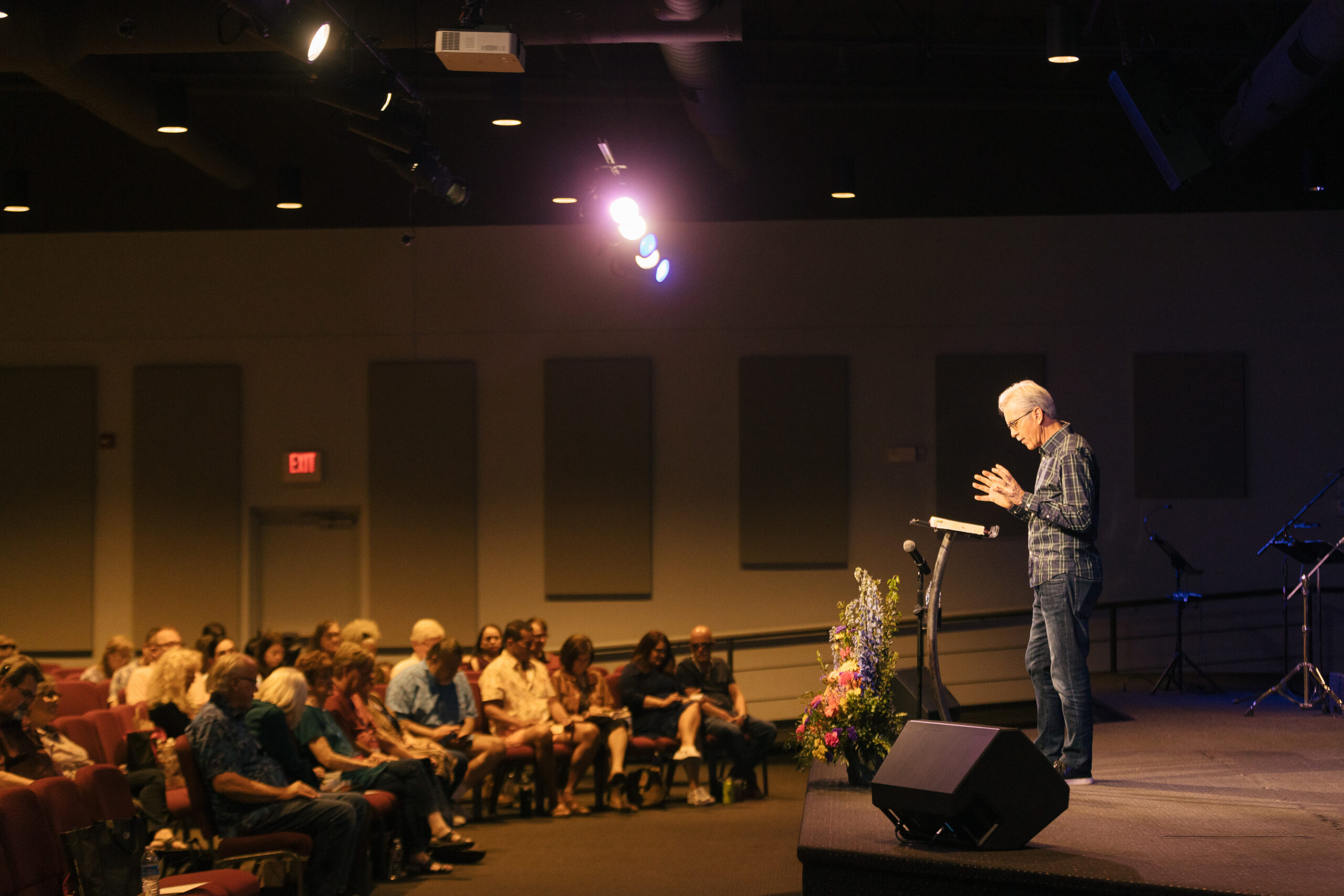
At the close of this message, we did not merely talk about healing; we made room to pray. I invited everyone to picture themselves coming before the throne of the kindest, most loving Being in the universe—not groveling before a reluctant God, but approaching a Father who is never impatient and never in a hurry.
The first need I sensed was pain in the heart: grief, sadness, disappointment, confusion, wounds inflicted by others, and the lingering effects of trauma. We asked the Holy Spirit to rest over the room, to help people forgive and release what had wounded them, and to heal the fragmented pieces of the soul. First Peter 5:7 tells us to cast our cares on the Lord because He cares for us. Jehovah-Rapha still mends, stitches, and restores what life has torn. You are not a failure, a mistake, or an accident. You are loved by the Father.
During prayer, I saw a picture of someone sitting across a table from the Father. A jumbled pile of belongings covered the table, like the contents of a purse emptied all at once—though men carry plenty of inner clutter too. In the picture, the person simply pushed the whole confused pile toward God. That is an invitation for us: shove the hurt, pain, and disordered pieces of the heart toward the Father and let Him put them in order.
Because it was Labor Day weekend, we also prayed for people wearied by work and life’s burdens, including those watching online. We asked God to lift heaviness, refresh and rejuvenate His people, and grant them a special touch of grace—the kiss of heaven, His healing strength.
Then the Holy Spirit highlighted physical needs. We prayed for healing where the neck meets the spine and for the upper backs, vertebrae, and discs to be restored. Members of the congregation gathered around those who came forward and offered short, direct prayers. Some were being “conscripted into service,” as I jokingly put it: this is the Lord’s army, and they had been drafted to love and pray for one another.
We prayed for a brother diagnosed with cancer, asking God to destroy cancerous cells, strengthen his body, and ease the side effects of chemotherapy. We prayed for an inner-ear condition causing balance problems. We prayed for someone facing kidney disease and the possibility of dialysis, asking for supernatural intervention and restored kidney function.
We also prayed for knees. A visiting family reminded me that during an earlier visit, one of them had received prayer and healed in his knee—a testimony I had not remembered until he mentioned it that morning. Adults and teenagers gathered to pray because there is no junior Holy Spirit, and even those who feel their faith is small can obey Jesus. We prayed for pain to leave, for mobility to return, and for knees to be restored, including my wife’s left knee.
Finally, we prayed for a long-standing shoulder or rotator-cuff problem. The brother tested his range of motion; it was present, though pain remained and was often worse at night. We prayed again, asking the Lord for a pain-free night and complete restoration. When the result was not yet complete, we did not manufacture a testimony or put pressure on him. We blessed what God was doing and continued to believe for total healing.
That is how a healthy healing ministry should look: ordinary believers praying simple prayers, listening to the Holy Spirit, testing carefully, telling the truth, and leaving the outcome to Jesus.
The greatest healing begins with reconciliation with God. Anyone can come to Christ simply and sincerely: “Jesus, I believe You are the Son of God. You came to earth, were born of a virgin, died, rose again, and will come again. I give You my life. Take my pain, fill me with Your Spirit, and teach me to walk with You.”
From Marah to the Cross
At Marah, God revealed His healing name beside bitter waters. At Calvary, Jesus entered into the deepest bitterness of human sin, suffering, and death, establishing a better covenant in His blood.
The covenant is better. The Mediator is perfect. The sacrifice is complete. The promises are established. The Holy Spirit is present. And the Father’s heart has not changed.
Jehovah-Rapha is more than a name from Israel’s history. He is the God revealed in Jesus Christ—the One who went about doing good and healing all who were oppressed by the devil.
We will not build our faith on what happened or did not happen yesterday. We will ground our faith in the Word of God. We will come through the blood of Jesus, pray simple prayers, honor the Holy Spirit, reject condemnation, and expect God’s mercy to meet His people.
Healing is not a formula, a performance, or something we manufacture. It is an expression of the Father’s mercy, grounded in the finished work of Jesus and the Holy Spirit’s ongoing ministry. Some may be healed instantly. Some may notice gradual improvement. Some may find deep peace and strength as the healing journey continues. We will not compare, condemn, or pressure anyone.
Our confidence is not in the quantity of our prayers but in Jesus Christ, the Mediator and Guarantee of the better covenant.
So let this final question be a personal invitation: If Jesus is the Guarantee of a better covenant, what need will you bring to Him today, with renewed confidence in the covenant?