What if today were “a certain day”?
This message grows out of four weeks spent learning to commune with the Holy Spirit—how to fellowship with Him, trust Him, and partner with Him. It also points to another essential subject: learning to hear God. Those themes converge whenever we pray for healing, because healing is not something we accomplish for God. It is the work of Jesus as we listen to and cooperate with the Holy Spirit.
Luke introduces the healing of the paralytic with these words: “Now it happened on a certain day, as He was teaching, that there were Pharisees and teachers of the law sitting by, who had come out of every town of Galilee, Judea, and Jerusalem. And the power of the Lord was present to heal them” (Luke 5:17 NKJV).
What made that day different from the day before or the day after? God was present and active. Of course, He is always present, but sometimes His presence becomes especially tangible, faith rises, and people become aware that God is near and ready to act. I have been in meetings where God’s presence was so strong that nearly everyone we prayed for was healed. I have also been in meetings where it did not seem as though much was happening, yet God was still at work. We cannot live only by what we feel, see, or sense. Still, there are “certain days” when the Lord’s power is unusually present to heal.
What if today is such a day for you? What if the thing you have been believing God could change today?
Jesus demonstrated the love, compassion, and present reality of the Father’s nature and kingdom by forgiving and healing the paralytic. The religious leaders sat in judgment, wondering who Jesus thought He was. They saw only the carpenter’s son, the son of Joseph and Mary. They did not recognize that the eternal Son of God—the great I AM—was walking among them.
Jesus could say, in effect, “When you see Me, you see the Father. I and My Father are one” (John 14:9–11; John 10:30 NKJV). His healing ministry revealed not only God’s compassion but also the superiority of God’s kingdom over sin, sickness, and the works of darkness.
God is always good, though He is not always predictable. Jesus Christ is “the same yesterday, today, and forever” (Hebrews 13:8 NKJV). His nature has not changed. He is not merely the God who acted yesterday; He is the great I AM, present with us now, who still heals the sick and does miracles among us.
Healing and the Ministry of Jesus
Healing was central to Jesus’ ministry. When the Gospels summarize His ministry, they repeatedly mention healing. Matthew 4:23 says, “Now Jesus went about all Galilee, teaching in their synagogues, preaching the gospel of the kingdom, and healing all kinds of sickness and all kinds of disease among the people.” (NKJV)
The word “all” matters. Jesus healed every kind of sickness and disease that came before Him. In the ancient world, leprosy was among the most feared diseases. Those afflicted were separated from their communities and could not return unless they recovered and were pronounced clean by the priests. Yet Jesus healed lepers. His ministry announced that no disease was beyond God’s reach—not leprosy then, and not HIV, pancreatic or liver cancer, heart disease, multiple sclerosis, or mental illness now.
Years ago, we saw very few people healed of mental illness in the ministry circles where I serve. Then, in 2007, I hosted a large healing school at another church in Tucson. About eight hundred people registered, and the evening meetings filled the sanctuary beyond its normal capacity.
On Thursday afternoon, we had been praying for people to be filled and touched by the Holy Spirit. It was not specifically a healing meeting. As I was leaving for lunch, I noticed a shy young woman standing near the back doors. I felt the Holy Spirit say, “Pray for her.” She had not asked for prayer, and, frankly, I was hungry and ready to leave. Nevertheless, I stopped, touched her forehead, and prayed a very simple prayer: “I bless you in Jesus’ name.” Nothing visible happened. She smiled, thanked me, and left.
What I did not know was that this young woman, Julie, had been diagnosed with severe bipolar disorder and schizophrenia. She was in her early twenties. Her condition had become so debilitating that she could barely hold a conversation with her mother on the telephone.
When Julie returned to her apartment, she sensed the Holy Spirit instructing her to anoint herself with olive oil. It sounded unusual, but she believed it was the Lord. She poured the oil over herself as she lay on the kitchen tile and stayed there through the night, resting in God’s presence. When she awoke the next day, she was healed.
Julie called her mother and spoke freely. Her mother immediately sensed that something dramatic had changed. On Friday evening, Julie came to the meeting with her mother and stepfather, who was an executive pastor at a church that did not believe such miracles were for today. They told us what had happened, and Julie and her family shared their testimony with the congregation. The room erupted in praise. Her healing was not distant or theoretical; it had happened here in Tucson. Our church has stayed in contact with her over the years, and she later married.
People have asked what impressive prayer I prayed that day. It was simply, “I bless you in Jesus’ name.” I heard God say, “Pray for her,” and I obeyed. That is the point: we are not the healers. God is.
I cannot heal schizophrenia or cancer. I do not know why God’s power is dramatically evident in one moment and seems hidden in another. But I know that Jesus has not changed.
Some Christians teach that miraculous gifts ceased after the church’s early centuries, often citing Paul’s statement that “when that which is perfect has come, then that which is in part will be done away” (1 Corinthians 13 NKJV). Meaning, we have the completed canon of Scripture (Bible), and God’s word is perfect; therefore, the continual need for sign gifts is not normal today. I respect fellow believers who read the passage differently, but I find no place in Scripture, including this passage, that says God stopped doing miracles. I believe the Holy Spirit’s work continues, and Jesus is still the same today.
Even churches skeptical of healing maintain prayer lists for people in the hospital. When someone we love receives a devastating diagnosis, something in us still reaches toward God and asks for a miracle. We know that medicine and healthy choices matter in a fallen world marked by disease, harmful substances, and human frailty. Yet sickness is not a revelation of the Father’s heart. Jesus is the perfect representation of the Father, and He healed the sick. His ministry revealed God’s goodness and compassion.
The Commission to Heal
Jesus did not reserve the healing ministry for Himself. He gave the twelve disciples authority to do what they had seen Him do.
Matthew 10:1–8 records that Jesus gave the twelve power over unclean spirits and authority “to heal all kinds of sickness and all kinds of disease.” He sent them to announce, “The kingdom of heaven is at hand,” and commanded them: “Heal the sick, cleanse the lepers, raise the dead, cast out demons. Freely you have received, freely give.” (NKJV)
He later gave a similar assignment to a much larger group.
Luke 10:1–2, 9 tells us that the Lord appointed seventy others and sent them two by two into every place He was about to visit. He instructed them, “Heal the sick who are there, and say to them, ‘The kingdom of God has come near to you.’” (NKJV)
Healing was therefore not limited to Jesus or even to the original twelve apostles. It was part of the kingdom mission entrusted to other disciples as well.
This commission extends to believers today. In Mark 16:15–18, Jesus says, “Go into all the world and preach the gospel to every creature.” He then declares that signs will follow those who believe: they will minister in His name, and “they will lay hands on the sick, and they will recover.” (NKJV)
The passage encompasses the full scope of that commission: “He who believes and is baptized will be saved; but he who does not believe will be condemned. And these signs will follow those who believe: In My name they will cast out demons; they will speak with new tongues; they will take up serpents; and if they drink anything deadly, it will by no means hurt them; they will lay hands on the sick, and they will recover” (Mark 16:16–18 NKJV). These words are a promise of Christ’s power and protection for His people as they obey Him, not an invitation to recklessly test God.
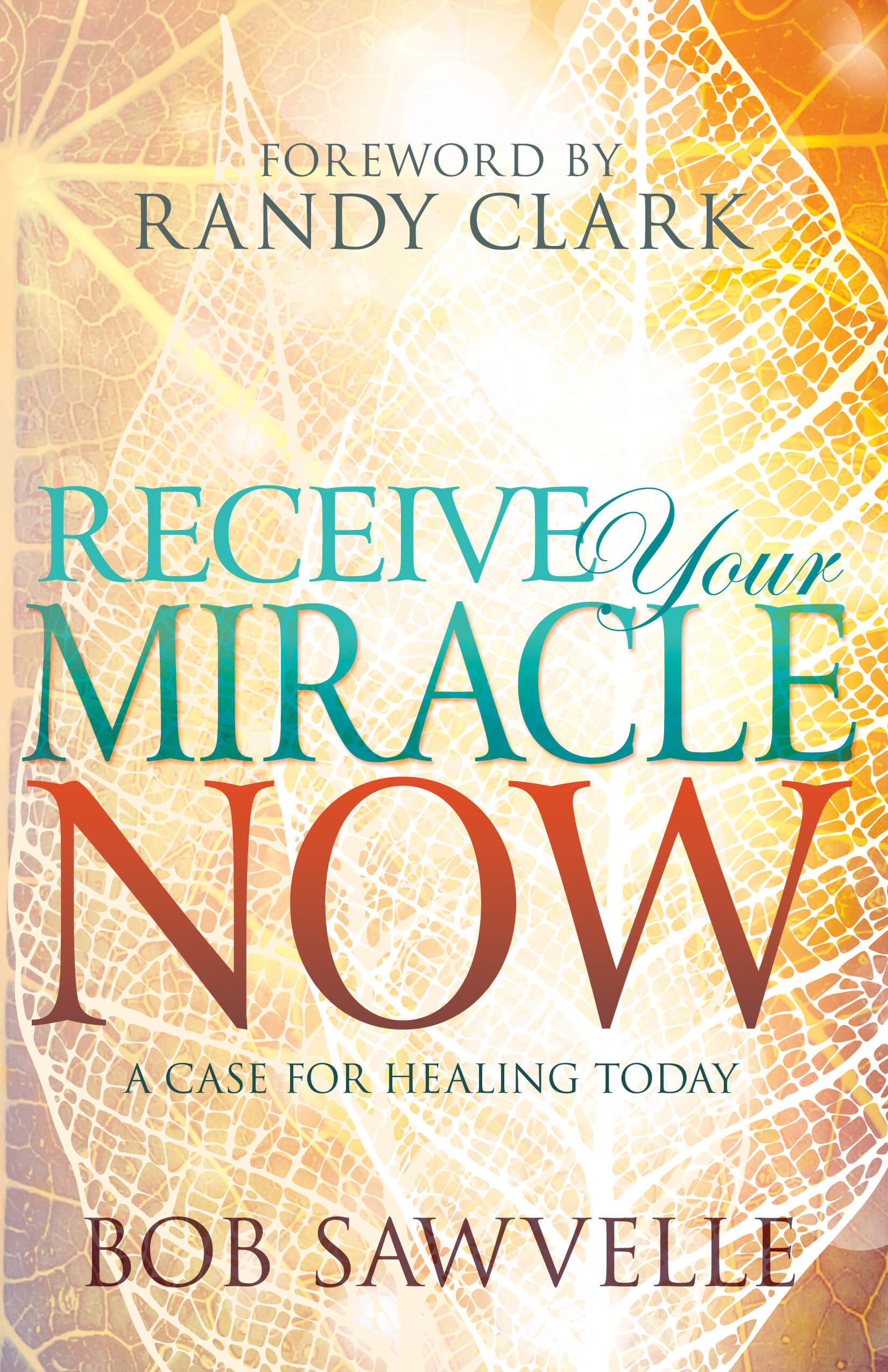
Some scholars note that these words appear in the longer ending of Mark and therefore are not acceptable to prove the continuation of miracles and healing ministry. I discuss this issue more fully in my book Receive Your Miracle.
The passage reflects what the early church knew through experience: the gospel was proclaimed, believers prayed, and healings occurred. The commission to preach the gospel and the commission to minister in Jesus’ name belong together.
Notice that Jesus did not say recovery would always be immediate. Sometimes healing unfolds after prayer. Sometimes it is partial or progressive, as when Jesus prayed for the blind man who first saw people “like trees, walking” before his sight was fully restored (Mark 8:22–25). We do not need to manufacture a result. Our responsibility is to obey; God remains the healer.
Years ago, I ministered in a leprosy colony in India. We did not witness an obvious, dramatic healing that day, but we laid hands on people, prayed, and hugged them. Many had not been embraced because others feared contracting the disease. No one on our team became sick. Whether or not we witnessed the physical miracle we desired, those precious people encountered God’s love.
That must always remain central. Everyone we pray for should experience dignity, love, and honor, even if healing isn’t immediately visible.
Partnership Begins in the Presence of God
Jesus promised in John 14:16 that He would send “another Helper”—the Holy Spirit—who would be with us and help us continue the works of Jesus. The Holy Spirit is our Comforter, friend, and partner. The New Testament word koinonia conveys fellowship, partnership, and shared participation. He shows us how to pray, gives us courage, and shares responsibility with us as we obey.
Our preparation for healing ministry begins with a consistent daily relationship with God through prayer and meditation on His Word. Life and ministry flow from intimacy with the Father. Pray in the Spirit. Wait on God for revelation. Expect to encounter Him, and then do what He reveals.
Jesus said in John 14:23 NKJV, “We will come to him and make Our home with him.” God makes His home with the one who loves Him and keeps His word. None of us is as intimately acquainted with the Father or as completely obedient as Jesus was. Yet grace saves and transforms us, and by the same grace the Holy Spirit lives within us. Because Christ is in us, ordinary believers can do the works of Christ through His power.
Do we have any “ordinary believers”? I am a pastor and church leader, yet I am still an ordinary believer. When I first began learning about God’s healing presence in the 1980s, it felt foreign to me. I simply read the Scriptures and began to ask whether the God who performed miracles throughout the Bible might still be doing so. I became convinced that He is.
Mary’s instruction at the wedding in Cana offers us a simple principle for ministry: “Whatever He says to you, do it” (John 2:5). God is the healer. Our role is to listen and obey.
That does not mean acting carelessly. If you sense God asking you to do something unusual, make sure it is the Lord and always honor the person receiving prayer. Once, while praying through a translator for a woman with a visible cancerous tumor, I felt the Lord tell me to strike the tumor. Before acting, I asked the translator to obtain the woman’s permission. If she had said no, I would have respected her decision. She agreed, and I sensed I should strike it three times while praying for healing. I do not know what ultimately happened in her body, but I obeyed while honoring her consent.
On another occasion in Brazil, I prayed for a woman who had been deaf in her left ear since birth. I sensed the Lord telling me to blow into her ear. Again, I asked a translator whether she was comfortable with that. She agreed. I blew three times and continued to pray. As we persisted for ten or fifteen minutes, she could hear a little more each time. We asked the Holy Spirit to increase His healing presence. Tears came to her eyes as she realized she could hear through the ear that had always been deaf. It was Jesus—not us, but Christ in us.
Such unusual directions are not formulas. Jesus Himself sometimes healed with a word or a touch, and once He used saliva and mud. The lesson is not to imitate an outward method indiscriminately; it is to cultivate enough fellowship with the Holy Spirit to recognize and obey His leading while treating people with wisdom and respect.
We should also live free from unforgiveness and choose to love and honor all people. Ask God to give you His love for each person you pray for. Whether that person is healed immediately, later, or does not receive the outcome you hoped for, they still need to encounter the Father’s love.
Do not become anxious if the sick person seems to have little faith. Faith matters and can help, but Scripture and experience show that God sometimes heals people who do not expect Him to act. At other times, He moves even when the person praying has very little confidence. Some of the greatest healings I have witnessed occurred when I felt weak and uncertain. It is not about the greatness of our faith; it is about Jesus’ greatness.
When Healing Is Not Immediate
One of the most dramatic healing stories I have heard involved a ministry team in Brazil. An ordinary woman on the team—not a pastor or a well-known leader—met a man who had been blind since childhood because muriatic acid had damaged his eyes. Everyone in his small town knew he was blind.
On the team’s final night, this woman prayed for him for nearly six hours. When the meeting ended, the others urged her to stop because the team needed to return to the hotel and fly home. Still, she kept praying. There was no visible change. Eventually, she left with the team, having done what she believed God asked.
A few days later, our ministry overseer, Randy Clark, received a call from the local pastor. About three days after the prayer, the man had awakened with brand-new eyes, and his sight was completely restored.
Mark 16 says that believers “will lay hands on the sick, and they will recover.” It does not specify how quickly recovery will occur. This story reminds us that an apparent lack of immediate change does not mean God is absent or that our prayer has failed.
At the same time, I do not claim to understand every outcome. I do not know why some people are healed instantly, some gradually, and some not at all in this life. I do not know why one person recovers from cancer while another faithful believer dies from it. If we allow unanswered questions to define God’s character, however, we may stop trusting Him to do anything. We hold the mystery honestly while continuing to believe Jesus is good and still heals.
Sometimes the need is physical; at other times, it is emotional, relational, or financial. Some conditions are life-threatening, while others are merely persistent and aggravating. Why should we decide in advance which concerns merit God’s attention? He cares for the whole person.
A Simple Way to Pray
You do not need to have everything figured out before praying for someone. Begin by asking the person’s name. Ask what condition they would like prayed for and how long they have had it. Listen carefully and compassionately. Then invite the Holy Spirit to lead you and pray directly for the need.
You might say, “Father, we bring this condition to You. In Jesus’ name, let the pain and inflammation leave. Holy Spirit, release Your healing presence and restore this body.” Pray with faith, not under pressure or performance. If appropriate, ask whether anything has changed. When healing is partial, thank God for the improvement and pray again.
That happened during the service when I preached this message. As people gathered in small groups to pray, Anita received prayer for a back problem that had begun about three weeks earlier. She reported that her back felt stronger and was improving. We prayed again, specifically addressing the pain, possible sciatic involvement, and inflammation. She moved and twisted to test it, then said it was still improving. We celebrated what Jesus was doing and kept asking for complete healing.
An experience at a friend’s church in Pittsburgh taught me the same lesson. The wife of one of the church elders had a severe back condition. Chiropractic care and other medical consultations had not resolved it, and surgery was being considered. The pain was so intense that she and her husband, who had served as elders for nearly thirty years, considered leaving their beloved church because she could no longer manage its steep stairs.
She made it to a Saturday evening meeting and was among the last I prayed for. Nothing dramatic seemed to happen, though she felt her condition might be improving. The next morning, she felt significantly better. Because her back problem had caused her to lose several inches of apparent height, they measured her and found she had already regained about an inch.
She returned to church for more prayer. Afterward, she noticed another significant improvement. When her husband measured her again at home, she was nearly back to her original height of about five feet four inches. Her pain disappeared, her mobility returned, and her surgeon decided that surgery was no longer necessary. She went from needing chiropractic treatment several times a week to an occasional monthly visit.
We did not have to manufacture that healing. Jesus was the healer, and the work unfolded in stages.
During the same service where Anita testified, I also prayed for my friend Jeff, who was not in the room. He had undergone back surgeries at Johns Hopkins but still experienced severe pain, including sciatic nerve pain that made sitting difficult. We asked the Lord to place His hand on Jeff’s back, to heal what surgery had not, and to release the same healing to everyone present or watching online who was suffering from back pain. Prayer is not limited by distance; we can ask God to send His word and heal.
The Father’s Heart Is Wholeness
We live in a fallen and broken world. Peter warns that “the devil roams like a roaring lion, seeking whom he may devour,” and urges believers to be sober, vigilant, and steadfast in faith (1 Peter 5:8–9). Jesus described the enemy as one who comes to steal, kill, and destroy. This does not mean every illness has a direct demonic cause. Genetics, environmental exposures, food, chemicals, injury, and many other aspects of life in a fallen creation affect our bodies. It does mean that sickness and destruction do not reveal God’s final purpose.
In Luke 13:10–17, Jesus encountered a woman bent over for eighteen years. Religious leaders objected because He healed on the Sabbath, but Jesus declared that this daughter of Abraham, whom Satan had bound, ought to be loosed. He prayed, and she stood upright. Jesus came to free people, not to shame them.
The same compassion appears in the paralytic’s story (Luke 5:18–26). When friends lowered the man through the roof, Jesus first said, “Son, your sins are forgiven you.” When the religious leaders objected, He asked which was easier—to forgive sins or to tell the man to rise, take up his bed, and walk. He then healed him. The One who forgives our sins and restores our broken lives is the same One who heals our bodies.
God revealed Himself as Jehovah Rapha: “I am the Lord who heals you” (Exodus 15:26 NKJV). The psalmist declares, “He sent His word and healed them” (Psalm 107:20 NKJV). These truths invite us to pray for those struggling with pain, inflammation, back problems, sciatica, arthritis, depression, bipolar disorder, schizophrenia, discouragement, and other forms of suffering. Mental illness carries no shame. We approach every person with compassion and ask Jesus to bring wholeness.
Every physical healing in this life is ultimately temporary; unless Christ returns first, each of us will one day die. Yet that reality is not a reason to surrender prematurely to sickness, pain, heartbreak, or despair. Healing is a sign of the kingdom already among us and of the complete restoration that will come when Christ makes all things new.
Make Yourself Available
Church is more than listening to a Sunday morning teaching. It also means doing what Jesus commissioned His people to do. You do not need a title, a platform, or years of specialized training. If you know and love Jesus, you have been invited into His mission.
Begin in intimacy with the Father. Stay rooted in Scripture. Pray in the Spirit. Release unforgiveness and choose love. Ask the Holy Spirit what He is doing, then follow His leading with humility, wisdom, and respect. When appropriate, lay hands on the sick, pray in Jesus’ name, and trust the results to Him.
Above all, remember who is responsible for the miracle. We are not healers. We are ordinary believers learning to partner with an extraordinary God.
So pray a simple prayer this week: “Lord, I want to be available. Put someone in my path to love and pray for.” Then watch what God does.
The God who met the paralytic on “a certain day” remains present. Jesus Christ is the same yesterday, today, and forever. Whatever your need—physical, emotional, relational, or financial—rehear His declaration: I AM.
He is not merely the God of yesterday. He is the God of today. The power of the Lord was present to heal then, and He remains the Lord who heals now.