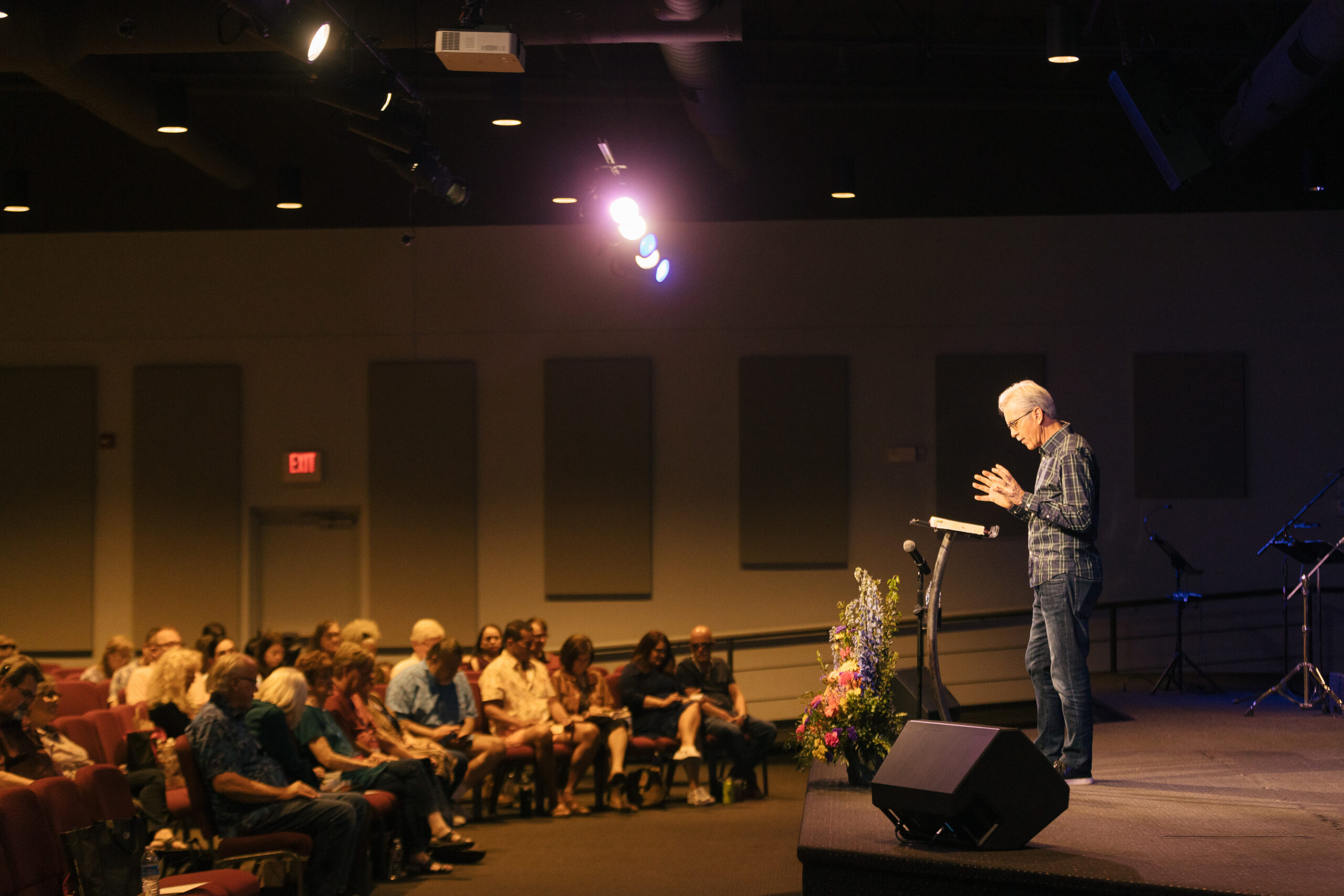
Tell God What You Need
Last month, I discussed our rights as God’s children to ask Him with confidence in prayer. While we can’t control the outcome of prayer, we can control our response to situations.
Jesus lived in response to the Father, not to the devil or to circumstances. Jesus modeled dependence on the Father and the Holy Spirit, and he invites us to do the same.
However, when we allow worry and fear to control us, we limit the authority we have been given as God’s children and citizens of heaven.
Worry and fear left to rule in our minds will dilute our confidence in asking God. Today, I want to specifically look at the link between asking God for something, or petitionary prayer, and remaining in God’s joy.
• What has been shaping your prayers lately—faith or fear?
• Are you approaching God with confidence as a beloved child, or merely hoping He might listen?
Quick Recap from the Previous Article
In John 15:1-8, Jesus shares the parable of the vine and the vinedresser. He states a couple of important principles in John 15:7, “If you abide (ménō) in Me, and My words abide in you, you will ask (aitéo) what you desire, and it shall be done for you.”
The English word ask in John 15:7 is from the Greek word aitéo, which is used to portray a person addressing a superior.
Aitéo is a verb that means to ask a question, expecting or requiring an answer. The individual approaches and communicates with their superior with respect and honor, yet understands that they may insist or demand that their superior fulfill specific needs. Additionally, aitéo conveys the idea that one firmly expects to receive what has been strongly requested.
The word aitéo, used in this verse, primarily refers to requesting physical and material things—such as food, clothing, shelter, and money. Further, Jesus stated that if we seek God’s Kingdom first, God will see to it that the material things we need are provided (see Matt. 6:33).
Persistent Prayer and Healing
About four years ago, our grandson David’s eyes were crossed. He saw a specialist who offered little hope of healing without surgery. Months passed, but we continued to pray. His mom had a sense in prayer to pray for the parts of his brain connected to eyesight. Specifically, she saw a vision of light flowing from the back of his brain to his eyes. So we all began to pray into this, and after weeks of praying, he woke up one day healed!
Many mothers understand this kind of persistent faith. A mother will often keep praying long after everyone else has given up hope. She may not have all the answers, but she refuses to stop believing God for her child.
Early Church father Augustine wandered far from God in rebellion and immorality for years before accepting Christ. Yet his mother, Monica, prayed faithfully for him. Eventually, Augustine surrendered his life to Christ and became one of history’s most influential Christian leaders in the fourth and fifth centuries.
Never underestimate what God can do through persistent prayer.
Tell God What You Need and Don’t Worry
In his letter to the Philippians, Paul gave us important insights for achieving answered prayer, remaining in God’s peace and joy, and living free of worry:
“4 Always be full of joy in the Lord. I say it again—rejoice! … 6 Don’t worry about anything; instead, pray about everything. Tell God what you need (aítēma) and thank him for all he has done. 7 Then you will experience God’s peace, which exceeds anything we can understand. His peace will guard your hearts and minds as you live in Christ Jesus.” Phil. 4:4, 6-7 NLT
“Be anxious for nothing; but in everything by prayer and supplication with thanksgiving, let your requests be made known to God.” Phil. 4:6 NKJV
The English word ” request ” is translated from the Greek word aítēma, which has at its root the word aitéo. By using the word “aitéo” in this verse, Paul also urges us to be bold, confident, and demanding as we pray. However, Paul underscores that our approach to God must not be rude or arrogant but rather filled with gratitude and thanksgiving.
What does Paul first instruct the Philippian disciples to do?
First, he tells them to rejoice in the Lord always (Phil 3:1; 4:4).
“Whatever happens, my dear brothers and sisters, rejoice in the Lord. I never get tired of telling you these things, and I do it to safeguard your faith.” Phil 3:1 NLT
Paul knew the powerful truth that joy and rejoicing benefit the believer, including in one’s prayer life.
Joy is not merely a characteristic of kingdom life; it is a powerful spiritual force (Rom. 14:17). Joy enabled Jesus to endure the cross and its suffering for all humanity (Heb. 12:2).
Joy flows from your relationship with Christ, not from your external circumstances. Joy is an enduring spiritual reality within God’s kingdom that will sustain you through challenging times. It is distinct from happiness.
While happiness depends on “happenings” and can be fleeting when circumstances change, peace and joy flow from your relationship with God. When you are truly abiding in Christ, his peace and joy remain constant.
Your ability to rejoice in all circumstances will safeguard our faith. God is always good, but suffering is part of our Christian walk. Difficult events happen in life, and many times we have no control over them. However, we do have control over how we react.
Reformer Martin Luther said, “You will have as much joy and laughter in life as you have faith in God!”
Remember, God works everything for your good. Maintaining the right perspective on problems and suffering will keep you at peace, filled with God’s joy despite hardships and setbacks.
Paul modeled the importance of always rejoicing in the Lord, even in difficult circumstances.
In Acts 16, we read that Paul and Silas were unjustly imprisoned in Philippi. At midnight, they chose to pray and praise God in this impossible situation. Despite their hardship, their worship and joy in Christ positioned them for a miracle.
God suddenly sent an earthquake that shook the prison, broke everyone’s chains, and opened the prison doors. They were delivered, and that night the Philippian jailor and his household came to Jesus.
Paul learned to be content despite circumstances (Phil. 4:11-12) and to find real joy by focusing his attention and energy on knowing Christ (Phil. 3:8) and obeying him (Phil. 3:12-13). He learned the truth of Psalm 16:11, “In Your presence is fullness of joy…”
His words are just as true for us today. Whatever happens, rejoice in the Lord. Never lose your praise or your hope. It may be midnight, but God specializes in suddenness!
Real joy is in your union with Jesus—abiding in his presence daily.
Your circumstances are not the problem; your perception of them is. Keep your focus on Jesus and let the joy of the Lord be your strength (Neh. 8:10).
The more you are in love with Jesus, the easier it is to rejoice always. When Jesus is your closest friend, his joy will have no limits in your life.
Genuine faith knows that God holds everything in his hands. You are his beloved, and he has your best interests at heart. A close relationship with Jesus will keep you in his peace, free from worry and fear. Trust him continually and learn to rejoice in him always.
Also, remember you are a citizen of heaven and an ambassador of another world (see Phil. 3:10). Society and the world are your assignment, not your permanent home. You have an eternal home and an eternal purpose; earth is your temporary residence. You have a heavenly inheritance now and in the future. You can rejoice because resurrection life is yours—now!
After Paul told the Philippians to rejoice always, he then instructed them to pray always and not to worry.
6 Don’t worry about anything; instead, pray about everything. Tell God what you need, and thank him for all he has done. 7 Then you will experience God’s peace, which exceeds anything we can understand. His peace will guard your hearts and minds as you live in Christ Jesus. Phil. 4:6-7 NLT
Prayer promises to bring us into a place of rest and God’s peace. We are to give thanks in all things, not only when difficult circumstances are over.
Paul instructs us to tell God what we need and then to give thanks. We are to give thanks to God from a place of expectation, knowing that you have asked (aitéo) and that the answer is on the way.
Gratitude keeps the heart postured in faith and in God’s peace. Confident prayer is thankful prayer, and it silences thoughts of worry and fear.
Thought-Provoking Questions
• Are your prayers filled more with fear or with expectation?
• Have you allowed worry to dominate conversations that should first be taken to God?
• What would change in your life if you truly believed God was listening every time you prayed?
• Are you praying from intimacy with God or merely reacting to pressure and circumstances?
Twentieth-century healing evangelist Smith Wigglesworth said about prayer, “If you want anything from God, you will have to pray into heaven. That is where it all is. If you live in the earth realm and expect to receive from God, you will never get anything.”
Learn to live from your union and victory in Jesus! Pray from the glory of his ascension, from heaven toward earth, not from earth toward heaven. When we pray from an earthly realm and mindset, our prayers sound more like “begging God” for an answer. But when we pray as confident children of God, whom the Father loves and desires to give good things, our prayer life changes dramatically!
Also remember that Jesus stripped the devil of his authority and delegated his authority to us (see Matt. 28:18-20). However, the devil regains authority through our unbelief and our agreement with his lies and schemes.
When you worry, you empower fear and agree with the enemy’s lies. It opens the door to oppression and even depression. Fear triggers toxic stress responses—1400 physical and chemical responses—and activates 30 different hormones and neurotransmitters in your body.
Worry is a manifestation of unbelief or of little or underdeveloped faith.
The writer of Proverbs had something to say about worry, “Anxiety (worry) in the heart of man causes depression, but a good word makes it glad.” (Prov. 12:25 NKJV)
When anxiety or worry is left to rule your mind and emotions, it can lead to discouragement and depression. One antidote is to rejoice always as you confidently remain in Christ and his word. (In my book, Fulfill Your Dreams, chapter seven, Worry Free Living, I discuss worry and fear in depth.)
Final Thoughts
God wants you to be confident in petitionary prayer. But remember, prayer is primarily about your intimacy and communion with God. You rest in him through prayer, releasing worry and receiving his peace.
Paul gave a final admonition in his letter to the Philippians:
“8 And now, dear brothers and sisters, one final thing. Fix your thoughts on what is true, and honorable, and right, and pure, and lovely, and admirable. Think about things that are excellent and worthy of praise. 9 Keep putting into practice all you learned and received from me—everything you heard from me and saw me doing. Then the God of peace will be with you.” Phil 4:8-9 NLT
You must adjust your thinking to heaven’s perspective—which is life-giving and positive. Get rid of negative thinking and refocus on positive thoughts and behavior. You will ward off worry and fear and be confident in your relationship with God.
Practical steps to position yourself in God’s peace and joy:
1. Have a close relationship with Jesus (abide in him)!
2. Read God’s word daily and consistently. Pray his promises over your life, your family, and others.
3. Choose to worship God consistently. Praise changes the atmosphere.
4. Be connected and involved with a local church. Worshiping and fellowshipping with others helps release God’s peace and joy in our lives. In fact, you need hugs from others. This can only happen through “real relationships!”
5. Serve others. When we give our time, talent, and treasure to serve others, God’s peace and joy flow into our lives. Your acts of love and service create a realm of heaven, which is God’s righteousness, peace, and joy (Rom. 14:17).
6. Don’t hold onto unforgiveness, worry, fear, or stress. Instead, choose to remain positive, hopeful, and optimistic in God. Humor and laughter significantly relieve stress and worry. “A merry heart does good, like medicine…” (Prov. 17:22 NKJV)
7. Lastly, choose contentment in all circumstances. God will never leave you nor forsake you, so remain confident in him always!
Final Prayer Questions
• What burdens are you still carrying that God has asked you to surrender to him?
• Have you been talking more about your problems than praying about them?
• What would happen if you truly believed God’s peace was greater than your current struggle?
• Are you living from heaven’s perspective or from earth’s pressures?
Your prayer life will become more confident, and you will have greater boldness to ask God for things. You have the right to ask, and God is expecting you to!
So, pray with a demand on heaven, expecting God to answer, and cover your prayers with thanksgiving. Rejoice in God always, and his peace and joy will keep you strong!